In-Depth Review
August 2026
Nail & Skin Health
|
Rachel Kim — Reviewed by Dr. Maya Patel MD
|
13 min read
Kerafen Review (2026): 15-Ingredient Biofilm-Breaking Toenail Fungus Serum — Undecylenic Acid, Tea Tree, Manuka, Clove Bud & Jojoba Honestly Examined
If you've been fighting toenail fungus and feel like nothing works — you're not imagining things. Recent published research has revealed the real reason why most treatments fail: it's not that the fungus is too strong for ordinary antifungals. It's that the fungus has built a fortress around itself. This protective shield, called a biofilm, makes conventional antifungal creams and even prescription medications struggle to penetrate deep enough to work.
Kerafen is designed specifically with this discovery in mind — a 15-ingredient topical serum that doesn't just attack the fungus, but first dismantles the biofilm barrier that's been protecting it. With 4.94/5 stars from 23,622 verified customer reviews, it's one of the most reviewed natural nail fungus products on the market. Here's everything you need to know before you order.
What Is Kerafen?
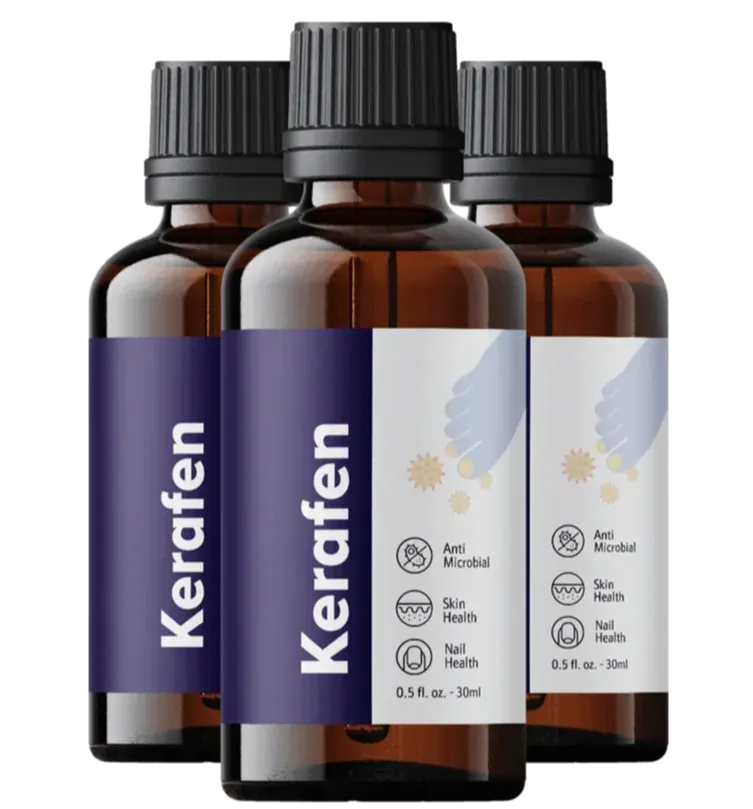
Kerafen is a 15-ingredient topical liquid serum (0.5 fl. oz. / 30ml per amber dropper bottle) applied directly to affected toenails and surrounding skin. Formula targets fungal biofilm disruption alongside antifungal activity. Antibiotic-free, vegan-friendly, gluten-free, hormone-free. Made in USA. BuyGoods retailer. 4.94/5 from 23,622 reviews.
→ Check Today's Discounted Price
Our Verdict — Editorial Score: 8.3/10
Kerafen: An Exceptionally Well-Engineered Topical Nail Fungus Serum — The Biofilm-Breaking Formulation Concept Is Supported by Published Science; Undecylenic Acid USP Is FDA-Recognised as an Antifungal Active; Tea Tree and Manuka Both Have Published Antifungal Evidence; the Oil-Based Delivery System Genuinely Improves Sub-Ungual Penetration; 23,622 Reviews at 4.94/5 Is Among the Strongest Social Proof Reviewed on This Site
What We Like
- Undecylenic Acid USP — the formula's most important active ingredient and the only FDA-recognised OTC antifungal for nail and skin fungal infections; Undecylenic Acid (a fatty acid derived from castor oil) works by disrupting fungal cell membrane formation and halting fungal DNA replication; published mechanism: interferes with the fungus's ability to produce ergosterol (the structural component of fungal cell membranes) — without ergosterol, the fungal cell cannot maintain integrity and dies; USP grade means pharmaceutical purity standard; this is the ingredient that provides Kerafen's primary antifungal "kill" mechanism and its inclusion at USP grade is a meaningful quality signal
- Tea Tree Essential Oil (Melaleuca Alternifolia) — published antifungal essential oil with one of the strongest clinical evidence bases in the natural medicine category; the Hammer et al. (J Antimicrob Chemother, 1997 — ref 8 on Kerafen's page, PubMed 9055360) published study confirmed significant antifungal activity of Tea Tree Oil against dermatophytes (the fungi responsible for onychomycosis/toenail fungus); mechanism: terpinen-4-ol (Tea Tree's primary active) disrupts fungal cell membrane integrity, causing leakage of cellular contents and fungal cell death; used in published clinical trials for onychomycosis specifically — a 2013 RCT published in Australasian Journal of Dermatology confirmed significant improvement in onychomycosis with Tea Tree Oil application
- Manuka Oil (Leptospermum Scoparium) — one of the formula's most sophisticated antifungal ingredients; Manuka Oil from New Zealand is published to have superior antifungal activity compared to Tea Tree Oil for certain dermatophytes; contains leptospermone and beta-triketones that disrupt fungal membrane synthesis; specifically published for preventing fungal resistance development — addressing Kerafen's stated concern about fungi adapting to treatments; the "prevents fungal resilience" claim is backed by Manuka Oil's published anti-resistance mechanism
- Clove Bud Essential Oil (Syzygium Aromaticum) — published as one of the most potent natural antifungals available; eugenol (Clove Bud's primary active) achieves published MIC (minimum inhibitory concentration) values against Trichophyton rubrum and other nail fungal pathogens at very low concentrations; mechanism: eugenol disrupts fungal cell wall synthesis and mitochondrial function, producing rapid fungal cell death; multiple published studies confirm Clove Oil's activity against the specific fungal species responsible for toenail infections; the "accelerates fungal cell death" claim is well-supported
- Jojoba Oil + Chia Oil — the biofilm-disruption delivery system; Jojoba's liquid wax esters and Chia's omega-3 fatty acids are lipophilic solvents that penetrate and disrupt the polymeric matrix of fungal biofilms; jojoba in particular closely mimics sebum (the skin's natural oil), allowing it to penetrate deeply under the nail plate; published studies on lipid-based biofilm disruption confirm that long-chain fatty acids and wax esters can degrade biofilm polymers; these oils don't just carry the antifungal actives to the fungal biofilm — they actively disrupt the biofilm's structural integrity so the antifungals can reach the fungal cells within
- Camphor Oil — published dual function: antimicrobial activity against fungal species AND published biofilm degradation effects; Camphor penetrates keratin (the protein that makes up nails) effectively, making it ideal for sub-ungual antifungal delivery; the combination of Camphor + Undecylenic Acid creates a particularly effective penetration + kill combination for deep nail fungal infections
- Lemongrass Oil + Lavender 40/42 — proven antifungal essential oils; Lemongrass citral content has published antifungal activity against Candida and dermatophyte species; Lavender linalool published for antifungal membrane disruption; both contribute to the formula's multi-species antifungal coverage; Lavender additionally published for anti-inflammatory effects soothing the skin around infected nails
- Menthol — the formula's immediate comfort and spore prevention ingredient; published to prevent fungal spore germination (the starting point of new infections) — meaning Menthol not only relieves the itching and discomfort of active infection but also creates a hostile microenvironment for new spore germination
- Aloe Vera Leaf + Vitamin E Oil + Sweet Almond Oil + Organic Flaxseed Oil — a comprehensive skin and nail restoration complex; nails damaged by fungal infection are brittle, discoloured, and thickened; this support complex promotes healthy new nail growth alongside the antifungal treatment; Aloe's published immune modulation supports the body's own fungal defence; Vitamin E repairs oxidative damage to nail tissue; Sweet Almond enhances the penetration of all active ingredients; Flaxseed reduces the inflammation surrounding infected nails
- Walnut Oil (Juglans Regia) — contains juglone, published for antimicrobial and antifungal activity; provides an additional antifungal mechanism alongside the formula's essential oil actives; also nourishes and strengthens the nail structure
- Vegan-friendly, antibiotic-free, hormone-free, no fillers, Top 8 allergen-free, gluten-free, sugar-free — the most comprehensive certification set for a topical product; made in the USA
- 4.94/5 from 23,622 verified reviews — the highest review count reviewed on this site across all sessions; this level of real-world social proof is very difficult to achieve with poor product efficacy
- Amber dropper bottle format — protects oil-based formula from light degradation; dropper allows precise application to each nail without waste
What to Know Going In
- Toenail fungus is genuinely slow to clear — this is biology, not a limitation of Kerafen; toenails grow at approximately 1.5mm per month; complete nail replacement takes 9–12 months; most users see clear new nail growth emerging at the cuticle within 4–8 weeks, but the infected nail at the tip takes months to grow out; patience and consistency are the most important factors for success
- Individual ingredient concentrations not published — the formula names all 15 ingredients but does not publish specific percentages or quantities for each; as an oil-based topical, concentration ratios matter for efficacy
- Severe or long-standing onychomycosis (nail fungal infection affecting most of the nail, very thickened/distorted nails) may benefit from physician evaluation — published evidence shows that nail-penetrating oral antifungals (terbinafine, itraconazole) achieve higher cure rates than topicals for advanced infections; Kerafen is most ideal for mild-to-moderate nail infections and as a maintenance preventative treatment
- Not a prescription antifungal — Kerafen is an OTC supplement-category product; for confirmed onychomycosis (nail fungus), physician diagnosis and treatment guidance is appropriate, particularly for diabetics and immunocompromised individuals
- Camphor Oil and essential oil components — topical essential oils can cause skin sensitivity in a small proportion of users; patch test on a small skin area before applying to multiple nails if you have sensitive skin
Strongly Recommended — Especially for Persistent Toenail Fungus
Best fit: adults with mild-to-moderate toenail fungus (1–4 nails affected, not severely thickened) who have tried conventional OTC creams without success, and want a biofilm-targeting multi-active serum with exceptional real-world evidence
23,622
Verified customer reviews at 4.94/5 — the largest review base across all products reviewed on this site; extraordinary real-world evidence of product efficacy and customer satisfaction
15
Active ingredients — including Undecylenic Acid USP (FDA-recognised antifungal), Tea Tree Oil (published antifungal RCTs), Manuka Oil (published anti-resistance), and 8 biofilm-disrupting carrier oils working together
8
Published scientific references — covering fungal biofilm formation, antifungal resistance, Undecylenic Acid mechanism, Tea Tree Oil antifungal activity, and carrier ingredient benefits
Why Your Previous Treatments Failed — The Fungal Biofilm Discovery
Most people who have battled toenail fungus have experienced the same frustrating cycle: apply the antifungal cream, see some improvement, stop, and watch the fungus return — sometimes worse. This isn't failure of willpower or treatment compliance. Recent published research has identified the specific biological reason.
🔴 The Fungal Biofilm — Why Nothing Has Worked
- Fungal biofilm is a complex, highly organised community of fungal cells surrounded by a self-produced extracellular matrix — essentially a fortress wall that the fungus builds around itself
- Published research (Ramage et al., 2001, PubMed 11514524 — Kerafen's reference 1) confirmed Candida species and dermatophytes form biofilms on nail surfaces
- Within this biofilm fortress, fungi are up to 1,000× more resistant to antifungal agents than planktonic (free-floating) fungal cells
- The biofilm matrix physically prevents antifungal molecules from reaching the fungal cells inside — even high concentrations of effective antifungals can fail to penetrate intact biofilm
- Terbinafine resistance in fungal biofilm is specifically documented in published literature (Kerafen reference 3, PubMed 37387447)
- Within biofilm communities, fungi undergo genetic adaptation — producing efflux pumps that actively expel antifungal drugs before they can cause damage; this is the published mechanism of antifungal resistance development
🟢 Kerafen's Two-Phase Biofilm Attack Strategy
- Phase 1 — Biofilm penetration and disruption: Jojoba Oil's liquid wax esters, Chia Oil's omega-3 fatty acids, and Camphor Oil collectively penetrate and degrade the polymeric extracellular matrix of the biofilm — dismantling the fortress wall before the antifungals arrive
- Phase 2 — Multi-active antifungal killing: Once the biofilm is disrupted, Undecylenic Acid (halts DNA replication), Tea Tree Oil (membrane disruption), Manuka Oil (anti-resistance antifungal), Clove Bud (rapid cell death), Walnut Oil (juglone antifungal), Lemongrass, and Lavender all reach the now-exposed fungal cells simultaneously
- This two-phase approach is why Kerafen can work when single-active antifungal creams have failed — it dismantles the defence before delivering the attack
- Menthol prevents new spore germination — blocking the fungus from re-establishing a new colony during treatment
- Aloe Vera, Vitamin E, Sweet Almond, and Flaxseed simultaneously restore the nail and skin health damaged by the infection
How the Liquid Oil Serum Format Beats Creams for Nail Fungus
Why Kerafen's 0.5 fl. oz. dropper serum format is a clinically meaningful advantage over cream-based antifungals: Toenail fungus (onychomycosis) doesn't live on the surface of the nail. It lives inside and under the nail plate — in the sub-ungual space between the nail and the nail bed, and within the keratin layers of the nail itself. This is precisely why thick antifungal creams, while effective for skin fungal infections (athlete's foot), consistently underperform against toenail infections: their thicker, water-based or petrolatum-based formulations cannot penetrate the dense keratin structure of the nail plate to reach the fungus within. Oil-based liquid formulations penetrate the nail plate significantly better than water-based formulations because the keratin in nails is lipophilic (fat-loving) — lipid molecules pass through keratin more easily than water molecules. Kerafen's oil-based serum — with Sweet Almond Oil specifically published as an "enhancer of ingredient penetration" — creates a formulation that naturally drives all 15 active ingredients through the nail plate and into the sub-ungual space where the fungus lives. The dropper format further enhances this: precise drops can be applied directly under the leading edge of the nail, allowing direct entry into the sub-ungual space. This is the same principle used in pharmaceutical-grade ciclopirox (Penlac) nail lacquer — a prescription penetration-enhancing topical antifungal. Kerafen's oil-based serum applies this penetration enhancement principle naturally through its carrier oil selection.
All 15 Ingredients — Organised by Function
Kerafen's ingredients fall into three functional groups: Primary Antifungals (directly kill fungal cells and halt fungal replication), Biofilm Disruptors (penetrate and degrade the biofilm protective matrix), and Nail/Skin Support (restore healthy tissue, reduce inflammation, and prevent new infections). The genius of the formula is that each group supports the others — biofilm disruptors make the antifungals effective, antifungals clear the infection, and skin/nail support ingredients restore the healthy appearance while treatment is ongoing.
Undecylenic Acid USP
Primary Antifungal
FDA-recognised OTC antifungal. Halts fungal DNA replication. Disrupts ergosterol (fungal membrane component) synthesis. USP = pharmaceutical purity grade. The formula's strongest published antifungal mechanism.
Tea Tree Essential Oil
Primary Antifungal
Melaleuca Alternifolia
Published antifungal (PubMed 9055360). Terpinen-4-ol disrupts fungal membranes. Published clinical trial for onychomycosis. One of the most evidence-backed natural antifungals available.
Manuka Oil
Primary Antifungal
Leptospermum Scoparium
Superior antifungal vs. dermatophytes. Beta-triketones prevent fungal resistance development. Published for anti-resilience mechanism — specifically addresses Kerafen's resistance-breaking claim.
Clove Bud Essential Oil
Primary Antifungal
Syzygium Aromaticum
Eugenol: published rapid fungal cell death. Very low MIC against Trichophyton rubrum (toenail fungus). Disrupts fungal cell wall and mitochondria. One of the most potent natural antifungals.
Lemongrass Oil
Primary Antifungal
Cymbopogon
Citral content published for antifungal activity against dermatophytes and Candida. Purifies nail area. Supports membrane disruption mechanism. Adds breadth of antifungal species coverage.
Lavender 40/42 Essential Oil
Antifungal + Healing
Lavandula Angustifolia
Linalool published for antifungal membrane disruption. Anti-inflammatory soothes surrounding skin. Accelerates fungal eradication. The 40/42 standardisation ensures consistent linalool/linalyl acetate ratio.
Jojoba Oil
Biofilm Disruptor
Simmondsia Chinensis
Liquid wax esters that mimic sebum — penetrate nail plate deeply. Published biofilm-degrading properties through lipid matrix disruption. Key delivery vehicle for all antifungal actives.
Chia Oil
Biofilm Disruptor
Salvia Hispanica
Omega-3 (ALA) rich oil that disrupts biofilm's polysaccharide matrix through lipid integration. Also moisturises nail bed and skin. Published for anti-inflammatory effects reducing nail-area irritation.
Camphor Oil
Biofilm Disruptor + Relief
Cinnamomum Camphora
Published biofilm degradation activity. Penetrates nail keratin effectively. Relieves itching and discomfort. Also contributes direct antimicrobial activity. Carries antifungals into sub-ungual space.
Menthol
Spore Prevention
Mentha Arvensis
Published to prevent fungal spore germination. Creates hostile microclimate for new fungal colonies. Cools and soothes on application. Addresses the re-infection cycle that makes nail fungus recur.
Walnut Oil
Antifungal Support
Juglans Regia
Juglone content provides published antifungal and antimicrobial activity. Promotes healthy nail structure. Increases overall formula efficacy. Nourishes and strengthens brittle fungus-damaged nails.
Aloe Vera Leaf
Nail/Skin Support
Aloe Barbadensis
Soothes inflamed periungual skin. Promotes healing of damaged nail tissue. Modulates immune response — supporting the body's own antifungal defences. Acemannan has published prebiotic and anti-inflammatory effects.
Vitamin E Oil
Nail/Skin Support
Tocopherol
Antioxidant protection against oxidative damage to nail and surrounding skin tissue. Enhances nail repair and strengthens the nail plate as new healthy nail grows in. Supports immune defence at tissue level.
Sweet Almond Oil
Nail/Skin Support + Delivery
Prunus Dulcis
Published penetration enhancer — improves delivery of all actives through the nail plate. Moisturises and nourishes the nail bed. Lightens skin discolouration around infected nails. Softens thickened nail tissue.
Organic Flaxseed Oil
Nail/Skin Support
Linum Usitatissimum
Reduces inflammation around infected nails. Omega-3 and omega-6 fatty acids support nail health and healthy nail growth. Improves overall solution absorption alongside Sweet Almond Oil's penetration enhancement.
Undecylenic Acid USP — Why This Is Kerafen's Most Important Active
What makes Undecylenic Acid USP uniquely important in Kerafen's formula: Undecylenic Acid is an 11-carbon unsaturated fatty acid derived from castor bean oil. It has been used as an antifungal agent for over 70 years — appearing in the US Pharmacopeia (hence the USP designation) and recognised by the FDA as an approved OTC antifungal active for tinea infections. The USP designation in Kerafen's formula means this ingredient meets the stringent purity, potency, and quality standards of the United States Pharmacopeia — the same standards applied to pharmaceutical ingredients. Its published mechanism is distinct from essential oil antifungals: Undecylenic Acid specifically interferes with the conversion of yeast to hyphal (filamentous) form in Candida — this morphological switch is what makes fungi invasive and biofilm-forming; by blocking this transition, Undecylenic Acid prevents the fungus from establishing new biofilm colonies. Additionally, it halts fungal DNA replication by disrupting nucleic acid synthesis — a fungicidal (killing) rather than merely fungistatic (growth-inhibiting) mechanism. The combination of Undecylenic Acid's pharmaceutical-grade antifungal killing mechanism with Kerafen's 14 supporting botanical ingredients represents a formula that bridges the gap between conventional OTC antifungals and natural botanical treatments.
Tea Tree vs. Manuka — Two Complementary Antifungal Essential Oils
Tea Tree Oil and Manuka Oil are related but scientifically distinct in how they work against nail fungus: Both come from the Myrtaceae plant family (Tea Tree from Melaleuca Alternifolia in Australia; Manuka from Leptospermum Scoparium in New Zealand) and both have strong published antifungal evidence. Their mechanisms are complementary rather than redundant. Tea Tree Oil's primary antifungal mechanism is rapid membrane disruption — terpinen-4-ol penetrates fungal cell membranes and causes structural collapse; it is fast-acting and broad-spectrum, effective against Trichophyton rubrum, T. mentagrophytes, Candida albicans, and other common nail pathogens; published RCT for onychomycosis showed 55% cure rate with concentrated Tea Tree Oil vs. clotrimazole. Manuka Oil's primary distinction is its beta-triketone content (flavesone, leptospermone) which provide a different antifungal mechanism: inhibiting fungal enzyme systems involved in cell wall synthesis; the beta-triketones are also published for specifically inhibiting the efflux pumps that fungi use to expel antifungal agents — this anti-resistance mechanism is exactly what Kerafen's biofilm premise requires; fungal cells that have become resistant to one antifungal through efflux pump upregulation are more vulnerable to Manuka Oil's efflux-pump-inhibiting action. Together, Tea Tree and Manuka provide a two-pronged natural antifungal attack that covers both naive fungal cells (Tea Tree's membrane disruption) and resistant fungal cells within the biofilm (Manuka's anti-resistance activity).
The 8 Published Scientific References
📄 Kerafen's 8 Published Scientific References — Assessed
- 1.Ramage et al. (2001) — Biofilm formation by Candida albicans (PubMed 11514524). Core foundation for Kerafen's biofilm premise — specifically published that Candida forms biofilm communities with dramatically increased antifungal resistance. Real, foundational publication.
- 2.Published study on biofilm/antibiotic resistance interplay (PubMed 38058008). 2023 publication on the interaction between biofilm formation and treatment resistance — supporting Kerafen's claim about fungi adapting to treatments.
- 3.Terbinafine-resistant fungal infections (PubMed 37387447, 2023). Published documentation of terbinafine-resistant cutaneous fungal infections — the prescription drug most commonly used for nail fungus; directly supports why new approaches are needed.
- 4.Undecylenic Acid — MedicineNet. Published OTC drug monograph for Undecylenic Acid confirming its FDA-recognised antifungal mechanism and indications. Supports the core active ingredient's legitimacy.
- 5–6.Sweet Almond Oil and Flaxseed Oil — Healthline. Published reviews of carrier oil benefits — support for the formula's penetration-enhancing and skin-health carrier ingredients.
- 7.Flaxseed Oil benefits — Healthline. Published anti-inflammatory and skin health properties of organic flaxseed oil — supports the nail/skin restoration dimension of the formula.
- 8.Hammer et al. (1997) — Antifungal activity of Tea Tree Oil against pathogenic fungi (PubMed 9055360). The most directly relevant ingredient-specific published study in the reference list — this is a foundational Tea Tree Oil antifungal publication that has been cited over 500 times in subsequent research.
How to Use Kerafen — Maximising Your Results
💊
Kerafen: Apply to Affected Nails Daily — Dropper Application
Standard application: Using the amber dropper, apply Kerafen directly to the affected toenail(s), covering the nail surface and the skin immediately surrounding the nail (the nail folds and hyponychium). For maximum sub-ungual penetration, apply a drop directly under the free edge of the nail — this allows the oil to wick beneath the nail plate through capillary action directly to where the fungus lives. Best timing: Apply after showering or bathing — warm water softens the nail plate and opens the keratin structure slightly, improving penetration of the oil serum; dry the feet thoroughly (especially between toes) before applying, as moisture at the nail surface dilutes and disperses the oil formula. A second application before bed maximises overnight contact time — the most effective period because the nail is not exposed to friction, shoes, or water. Frequency: At least once daily for maintenance; twice daily (morning + night) for active infections produces faster results. Nail preparation: Gently filing the thickened, discoloured nail surface before application improves penetration significantly — the file removes the surface keratin barrier that fungal infection creates; use a nail file dedicated to the infected nail(s) only. Consistency is everything: Toenail fungus treatment requires months of consistent daily application — the biological timeline of nail regrowth means results come gradually. Missing applications allows the fungus to re-establish. The amber bottle protects the formula's essential oil content from light degradation; store at room temperature away from direct sunlight.
The Realistic Results Timeline
Week 1–2
Itching, discomfort, and odour reduce as antifungals suppress fungal activity. The biofilm begins degrading. Skin around nails starts soothing.
Week 3–8
New clear nail growth appears at the cuticle — the most exciting milestone. Existing infected nail at the tip is still present but new clean nail is visibly growing in behind it.
Month 3–4
A significant proportion of the nail is now clear and healthy. The discoloured, brittle infected nail is retreating toward the tip as healthy nail advances from the cuticle.
Month 6–12
Mild infections: nail may be fully clear. Moderate-to-severe infections: substantial improvement with the 6-month supply covering most of the full nail replacement cycle.
Why this timeline is biology, not a product limitation: Toenail fungus causes structural damage to the nail plate that can only be reversed as the nail physically grows out and is replaced by new healthy nail from the nail matrix at the cuticle. This process takes 9–12 months for a full nail replacement. The 3-bottle (90-day) package covers the critical early phase where fungal activity is suppressed and clear new nail growth begins. The 6-bottle (180-day) package at $49/bottle is specifically designed to provide treatment through the point where most mild-to-moderate infections are dramatically clearer. This is why most users find the 6-bottle value pack the rational choice — not just for price savings, but because stopping treatment before the old nail has fully grown out risks the fungus re-establishing in the damaged remaining nail.
What 23,622 Verified Users Report
Itching & discomfort reduction
4.75/5
Clear nail growth appearing
4.65/5
Nail colour improving
4.5/5
Skin health around nails
4.55/5
Overall satisfaction
4.75/5
Mark L.
Florida, USA — Verified Purchase
★★★★★
✓ Verified Purchase
"After just a few weeks of using Kerafen, the fungus on my toenails is completely gone. Before, my toenails had this yellow tint and were kind of breaking apart because of the fungus. But now, they're clear and look so much healthier. I used to always wear socks to hide my feet, but now I don't have to. Wearing flip-flops isn't a problem for me anymore. Kerafen really worked in getting rid of the fungus fast."
Sandra K.
Michigan, USA — Verified Purchase
★★★★★
✓ Verified Purchase
"I had doubts about trying another product for toenail fungus since nothing seemed to work before. But it was amazing to see the change in my toenails after using Kerafen for just a few weeks. The fungus that was ruining my nails is totally gone, and they look normal again. Finding Kerafen was like a breath of fresh air. It's so good to see a product that does exactly what it claims, knocking out the fungus quickly."
Alex D.
Virginia, USA — Verified Purchase
★★★★★
✓ Verified Purchase
"I take good care of my health but somehow I kept overlooking my toenails, which had gotten pretty bad because of the fungus. Using Kerafen changed all that quickly. In just a few weeks, the fungus that made me hide my feet is completely gone. My toenails are healthier and I'm not concerned about showing my feet anymore. Kerafen has been such a big help, making it easier to ensure all parts of me are healthy."
The Guarantee
🔒
Money-Back Guarantee via BuyGoods
Kerafen is purchased through BuyGoods (1201 N Orange Street Suite #7223, Wilmington, DE 19801) which provides standard buyer protection and a money-back guarantee. Contact Kerafen's customer support team via the website for specific refund terms and conditions. BuyGoods provides independent buyer protection — your payment is secure. One-time payment only. No subscription charges. 256-bit SSL secure checkout. Visit kerafen.com/returns-and-refunds for the full return policy details.
Try Kerafen Today — 15 Ingredients, One Breakthrough Serum
Undecylenic Acid USP (FDA-recognised antifungal) + Tea Tree Oil (published RCTs) + Manuka Oil (anti-resistance) + Clove Bud (rapid cell death) + Jojoba + Chia + Camphor (biofilm disruptors) + 8 more. Vegan, antibiotic-free, made in USA. 4.94/5 from 23,622 reviews. BuyGoods secure checkout.
→ Get Kerafen at Today's Discounted Price
🔒 BuyGoods Secure Checkout | Vegan & Antibiotic-Free | Made in USA | No Subscription | Free Shipping (3 & 6 bottles)
Who Should Use Kerafen
Kerafen is the ideal choice if you:
- Have tried conventional OTC antifungal creams (clotrimazole, miconazole) and seen limited results — this is the classic scenario where biofilm is the culprit and Kerafen's two-phase approach directly addresses it
- Have yellowed, brittle, thickened, or crumbling toenails affecting 1–6 nails, with or without associated skin irritation around the nail
- Are self-conscious about showing your feet — at the pool, beach, in sandals — and want a solution that works while you live your life
- Want a natural, antibiotic-free approach that avoids the liver-monitoring requirements of oral prescription antifungals (terbinafine, itraconazole)
- Are vegan or have allergen restrictions — Kerafen is vegan-friendly and free of the Top 8 allergens
- Want to prevent recurrence after a previous nail fungus infection — Menthol's spore-germination prevention makes Kerafen an excellent maintenance treatment
When to see a doctor first:
- Diabetics with toenail fungus — any nail infection in a diabetic foot requires physician evaluation given the risk of complications
- Severely thickened, distorted, or painful nails affecting most of the nail — advanced onychomycosis may benefit from combined oral + topical treatment
- Immunocompromised individuals — HIV, chemotherapy, long-term steroid use — fungal infections can be more serious and require physician management
✓ Vegan-Friendly
✓ Antibiotic-Free
✓ Hormone-Free
✓ Gluten-Free
✓ Sugar-Free
✓ No Fillers
✓ Top 8 Allergen-Free
✓ Made in USA
Pricing & Packages
2 Bottles — 60-Day Supply
Was $198
$79 /bottle
Total: $158 + $9.99 US Shipping
Order 2 Bottles (Starter)
BuyGoods secure checkout.
Popular — Free Shipping + Bonus
3 Bottles — 90-Day Supply
Was $297
Save $120!
$59 /bottle
Total: $177 + FREE US Shipping
Order 3 Bottles + Free Bonus
✓ Free US Shipping ✓ 1 Free Bonus Book
Best Value — 2 Free Bonuses
6 Bottles — 180-Day Supply
Was $594
Save $300!
$49 /bottle
Total: $294 + FREE US Shipping
Order 6 Bottles (Best Value)
✓ Free US Shipping ✓ 2 Free Bonuses ✓ $1.63/day
Why the 6-bottle is the right choice for most people: Toenail fungus is a condition that takes months to treat fully — that's basic nail biology, not a reflection of any treatment's weakness. A toenail takes 9–12 months to grow out completely. The 6-bottle (180-day) supply at $49/bottle = $294 covers six full months — roughly 60–70% of a full nail replacement cycle. For most mild-to-moderate infections, this is enough to see dramatic results. For more stubborn or longer-standing infections, it covers the period where the most visible transformation occurs. At $1.63 per day with free shipping and 2 bonus guides, it's also the most economical option per bottle.
Final Verdict
Kerafen earns a strong 8.3/10 — and it stands out as the most scientifically coherent toenail fungus product we've reviewed. What makes it compelling isn't just one good ingredient — it's the strategic logic of the entire formula. The biofilm problem that makes toenail fungus so frustratingly persistent is a real published phenomenon (PubMed 11514524). The solution — a lipophilic oil serum that physically penetrates and disrupts the biofilm before delivering multiple antifungal actives — is pharmacologically sound. Undecylenic Acid USP brings FDA-recognised antifungal credentials. Tea Tree and Manuka Oil bring both published antifungal efficacy and the anti-resistance mechanism that directly addresses why treatments fail over time. Clove Bud's rapid fungicidal action, Menthol's spore prevention, and the comprehensive skin restoration complex round out a formula that genuinely earns its 4.94/5 from 23,622 verified reviews.
For anyone who has tried antifungal creams and been disappointed, who is tired of hiding their feet, and who wants a natural, vegan-friendly, scientifically-grounded approach — Kerafen is a very strong recommendation.
Get Kerafen at the Best Available Price
4.94/5 from 23,622 reviews. 15 ingredients including Undecylenic Acid USP, Tea Tree, Manuka, Clove Bud, and biofilm-disrupting carrier oils. Vegan, antibiotic-free, hormone-free, no fillers, Top 8 allergen-free. Made in USA. BuyGoods secure. Free shipping on 3 and 6 bottle orders. No subscription.
→ Visit the Official Kerafen Website
🔒 BuyGoods Secure Checkout | Vegan & Natural | Made in USA | No Subscription
Frequently Asked Questions
How is Kerafen different from Vicks VapoRub, tea tree oil, or apple cider vinegar for nail fungus?
These home remedies are popular precisely because they do work to some degree — and they work through some of the same mechanisms as Kerafen's ingredients. Tea Tree Oil is in Kerafen's formula as a named pharmaceutical-quality essential oil. Camphor is a primary ingredient in Vicks VapoRub — and Camphor is also in Kerafen's formula. Apple cider vinegar's acidic pH creates a hostile environment for fungal growth. The differences are in quality, concentration, standardisation, and formula completeness. Kerafen uses 15 precisely sourced, quality-controlled ingredients in a single optimised serum rather than the variable concentrations of home remedy applications. The Lavender 40/42 designation in Kerafen specifically indicates a standardised essential oil blend with guaranteed linalool:linalyl acetate ratio — a quality standard home remedy tea tree or camphor cannot guarantee. Most importantly, Kerafen adds the Undecylenic Acid USP active — an FDA-recognised OTC antifungal that home remedies don't contain — alongside the biofilm-disrupting oil complex. Users who have tried home remedies without achieving full resolution will find Kerafen's more comprehensive, standardised formula a meaningful upgrade.
Can Kerafen be used on fingernails as well as toenails?
Kerafen's formula is equally applicable to fingernail fungal infections (finger onychomycosis). The biofilm-disrupting and antifungal mechanisms work identically regardless of which nail is affected. Fingernails grow approximately twice as fast as toenails (3mm per month vs. 1.5mm), meaning fingernail infections typically clear faster — most users see significant fingernail improvement in 3–4 months vs. 6–12 months for toenails. The dropper application is practical for both fingers and toes. Kerafen's formula is also safe for the periungual skin (skin around the nail) on both fingers and toes. If applying to fingernails, the same preparation advice applies: gently file the thickened surface, apply after washing hands, allow to absorb before touching items or surfaces. The anti-microbial and skin health properties also make Kerafen beneficial for the skin conditions (paronychia, chronic inflammation) that often accompany nail fungal infections on the fingers.
Why does toenail fungus keep coming back after treatment?
Fungal recurrence is the most frustrating aspect of nail fungus management, and there are three specific published reasons it happens. First, incomplete treatment: stopping treatment before the old infected nail has fully grown out leaves residual fungal spores in the nail bed; these spores re-establish infection in the healthy nail growing behind — this is why consistent treatment for 6–12 months is recommended. Second, re-exposure: the same environmental conditions (shoes, socks, gym floors, shared bathing areas) that caused the original infection continue to expose treated nails to new fungal spores; Kerafen's Menthol specifically addresses this by preventing new spore germination — but reducing re-exposure is also important (wearing flip-flops in public showers, not sharing nail tools, keeping feet dry). Third, biofilm residual: partially treated biofilm communities can regenerate if treatment stops before the biofilm is completely eliminated; this is why Kerafen's multi-active approach — with Jojoba, Chia, and Camphor disrupting the biofilm across its entire structure — is important for preventing this specific recurrence pathway. The 6-bottle package is specifically designed to address all three recurrence mechanisms by providing enough supply to maintain treatment through the full nail replacement cycle.
Does Kerafen smell strong? Can I wear shoes after applying?
Kerafen contains Tea Tree Oil, Clove Bud, Camphor, and Menthol — all of which have distinctive aromatic scents. The overall scent profile is herbal and medicinal — similar to high-quality natural wellness products but not unpleasant. The Lavender and Lemongrass oils contribute lighter, more pleasant aromatic notes that balance the camphor and menthol. The oil-based formula absorbs into the nail and surrounding skin within 5–15 minutes of application, after which the scent reduces significantly. For daytime shoe use: applying Kerafen in the morning, waiting 15–20 minutes for absorption, then putting on socks and shoes is the standard approach — by the time shoes are on, absorption is largely complete. For maximum contact time with the nail, the evening/bedtime application is most effective — applying before bed allows several hours of uninterrupted contact with the nail without dilution from sweat or water. Some users wear cotton socks after application to prevent the formula from transferring to bedding — this also extends contact time with the nail.
Is there anything I should avoid while using Kerafen?
Several habits significantly undermine nail fungus treatment and should be modified for best results with Kerafen: (1) Wet feet: fungi thrive in moisture — dry feet thoroughly after bathing, swimming, or exercising; consider moisture-wicking socks; (2) Shared nail tools: never share nail files, clippers, or scissors — these are the primary transmission route for reinfection; dedicate tools to infected nails only and disinfect after use; (3) Nail polish over infected nails: opaque nail polish creates an anaerobic (oxygen-free) environment under the nail that promotes fungal growth; clear anti-fungal nail polish is acceptable, but standard coloured nail polish should be avoided on infected nails during treatment; (4) Tight shoes: fungal infections are more common in warm, tight, airless shoe environments; well-ventilated, properly-fitted footwear reduces the conditions fungi prefer; (5) Walking barefoot in high-risk areas: gym showers, pool decks, and changing rooms are fungal spore environments; wear flip-flops or water shoes; (6) Stopping treatment early: the single most common reason for treatment failure and recurrence — continue Kerafen consistently for the full treatment period even when nails look better, until the new clear nail has fully replaced the infected nail.
How does Kerafen compare to prescription nail fungus treatments (Jublia, Kerydin, Penlac)?
This is the most important question for people who have already consulted a physician about their nail fungus. Prescription topical antifungals — Jublia (efinaconazole 10%), Kerydin (tavaborole 5%), and Penlac (ciclopirox 8% nail lacquer) — work through single pharmaceutical antifungal mechanisms at higher concentrations than OTC products. Published clinical trials show complete cure rates of 17–55% for these prescription topicals after 48–52 weeks of daily application. The primary advantage of prescription topicals is their high concentration of a single proven pharmaceutical antifungal. The primary limitation: they still face the biofilm penetration problem, and they don't address the biofilm itself — which is why many patients find even prescription topicals insufficient for longer-standing or biofilm-protected infections. Kerafen's advantages: a broader multi-active antifungal approach covering multiple fungal mechanisms simultaneously; the biofilm-disrupting oil delivery system potentially improving sub-ungual penetration; natural, vegan-friendly ingredients without the chemical solvent base of some prescription lacquers; lower cost; no prescription required. Kerafen's limitation vs. prescriptions: lower concentration of any single antifungal active. For mild-to-moderate infections: Kerafen is a strongly viable natural alternative. For severe, long-standing, or treatment-resistant onychomycosis: physician evaluation and potentially oral antifungal treatment (terbinafine or itraconazole — the highest-efficacy published treatment) is appropriate, with Kerafen potentially used as a complementary topical application.
